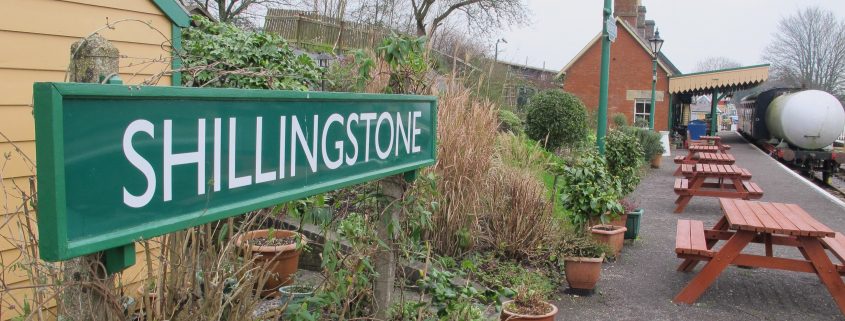
Shillingstone Station

The Station They Never Closed – Lecture 2.30pm Tuesday 05 March

Shillingstone Station opened in 1863 lit by oil lamps and closed just over a century later, still without gas or electricity. Built by the Dorset Central Railway, it became part of the Somerset and Dorset Junction Railway which provided a through route from Bath to Bournemouth. From 1910 The Pines Express gave holidaymakers from Manchester and the North direct access to the South Coast. Unusually for a small country station Shillingstone boasted a canopy, giving shelter to King Edward VII when alighting to visit his friends the Ismays at Iwerne Minster.

In February 1915 war poet Rupert Brooke marched with colleagues of the Hood Naval Battalion from Blandford Camp to entrain for Avonmouth and Gallipoli. It was easier to load the Battalion’s mules at Shillingstone rather than at Blandford. Brooke, well known for such lines as: Stands the Church clock at ten to three? And is there honey still for tea? died from septicaemia following an infected mosquito bite off Greece.

In 1966 Dr Beeching’s axe fell on the Somerset and Dorset line. The track was lifted in 1967; since 2005 volunteers of the North Dorset Railway Trust have been working to restore the station and some of the track. Jack Bath, Curator, and fellow Trustee David Caddy will tell the story of The Station They Never Closed (officially) at 2.30pm on Tuesday 05 March. This illustrated talk is free to members of The Shaftesbury & District Historical Society while non-members may pay £3 at the door.

Gold Hill Museum Chairperson Elaine Barratt in the Garden Room

Fish, Chips And Quiz Will Fund Museum Enhancement

Gold Hill Museum’s meeting and venue space is underused and Chairman, Elaine Barratt, is keen to encourage greater use of the charity’s Garden Room.

Now the Museum team is planning a quiz night and supper, to raise the funds needed to make the facility suitable for more Shaftesbury residents. ThisIsAlfred went to visit.

You have to know where you’re heading if you’re looking for the Museum’s Garden Room. You’ll pass down corridors and through three doors to reach the light, airy space at the back of the building. If you don’t know the room by name, it’s the area where the Tibetan Monks displayed their sand Mandala last summer.

“It’s a lovely space with a fabulous view,” said Elaine, as she gestured towards the green slopes outside the large windows. The views extend out past Gold Hill Museum’s tranquil gardens towards Melbury Hill. “We’re very keen for people to use it for events. We’ve got a couple of people booked in for the Fringe,” she said.

Each Garden Room booking helps to fund the town’s much-loved museum, which is staffed entirely by volunteers. But few groups currently book the space. “Julian Richards meets regularly on a Tuesday with his archaeology group. The Civic Society hired it just after Christmas for their AGM. It’s used occasionally, but not enough,” Elaine added.

You might assume that this room is used only in relation to historic or archaeological groups, but Elaine says that anybody can make a booking for public or private events. “We’ve had a christening party here in the past, so any social occasion is fine. We can have 36 sitting at tables, 48 sitting in rows and 60 standing. That’s the official capacity.”

There are facilities on site. “There was only ever room for one toilet but it has disabled access. The kitchen has everything you might need for refreshments. It has got an oven that you can heat things in,” said Elaine.

Previously the Museum has had to decline some potential Garden Room bookings because performers didn’t have insurance in place for their events but Elaine says they have now arranged cover. “We had an issue in the past with our public liability insurance not covering performers during Shaftesbury Fringe. But we’ve addressed that. And so hopefully we’ll get a lot more people using it, because it’s an ideal space for someone who wants to do a poetry reading or sell their book.”

The expanse of glass that gives the room its natural light and its views over the green slopes can make the space a little echoey. So the Museum wants to fit an induction loop, which will help some locals who are hard of hearing. “People with hearing aids do find the acoustics in here quite difficult, apparently. One of our previous stewards wouldn’t come to any social events here because of the acoustics. When there were a lot of people talking he couldn’t hear properly.”

Elaine hasn’t had quotes for the equipment but she’s got a rough idea of cost. “We’ve asked our museums advisor and she knows one that was put into a similar space. That was about £500 pounds,” said Elaine.

Gold Hill Museum is hosting a quiz to raise cash for the hearing loop. “We have a quiz planned on Friday 22nd February. We’re holding the quiz at the Heritage Suites in Bell Street – the Masonic Lodge. It’s 7pm for 7.30pm,” said Elaine. “It’s there because our Garden Room isn’t big enough to have enough people to make a quiz viable.” And of course, not everyone will be able to hear the questions in the Garden Room, as it currently stands.

“It’s going to be a fish and chip quiz,” added Elaine. “It’s £10 and the food is included. We’re asking people to make teams of up to six. But if people can’t do that, then we’ll try and get them together in teams. People do need to book in advance because obviously for catering for fish and chips, we need to know how many to order.”

Even though this is a Gold Hill Museum fundraiser, Elaine says that it won’t be a history quiz! “Definitely not. It’s going to be very much a broad spectrum of questions.” You can book your tickets or book the Garden Room by emailing enquiries@goldhillmuseum.org.uk

Copyright 2018 Keri Jones

Shire Hall Dorchester

Shire Hall: Justice in the Balance – Lecture Tuesday 05 February 2.30p.m.

Shire Hall in Dorchester was Dorset’s courthouse from 1797 until 1955. Through that time, it saw everything from the 1834 trial of the Tolpuddle Martyrs to the 1856 domestic abuse case that inspired Thomas Hardy to write ‘Tess of the D’Urbervilles’, to victims of mesmerism, child perpetrators and American GIs tried during the Second World War.

Alongside its human history lies Shire Hall’s intrinsic architectural value, as one of the best-preserved buildings of its kind. This is recognised in its Grade I listed status, awarded in 1950. It was designed by architect Thomas Hardwick. As well as being a well-known architect in his own right, Hardwick was also the architectural tutor of the artist J.M.W. Turner, before advising him to focus on his painting instead.

After ending its life as a court in 1955, Shire Hall was used as offices for West Dorset District Council (previously the Rural District Council), thus preserving the Georgian architecture for future generations.

This illustrated talk by Anne Brown, Learning Manager at the new Shire Hall Historic Courthouse Museum, is free to members of The Shaftesbury & District Historical Society, while non-members may pay £3 at the door.

Marie_Stopes (2)

The Remarkable Dr Marie Stopes – Lecture 2.30pm Tuesday 08 January 2019

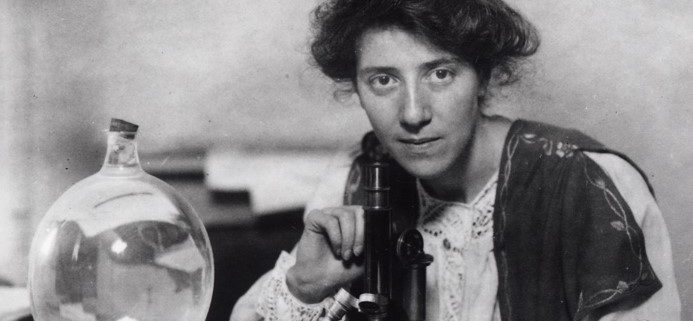
David Carter, Trustee of Portland Museum, brings an illustrated talk about the eventful life and times of the founder, benefactor and first curator of Portland Museum, Dr Marie Stopes (1880-1958), to the January meeting of The Shaftesbury & District Historical Society. In 1923, in the wake of a protracted and ultimately unsuccessful libel case, Marie Stopes bought the Old Higher Lighthouse on Portland. In 1930 she was instrumental in the opening of Portland Museum and remained a Trustee until shortly before her death. Her ashes were to be scattered off Portland Bill. The young Marie Stopes achieved distinction in the predominantly male world of academia: she was the youngest recipient of a DSc degree from University College London, earned a PhD in botany from the University of Munich, and from 1904 to 1910 was the University of Manchester’s first female academic as a Lecturer in Palaeobotany. In 1913 she could not find a publisher for her book Married Love which offered advice on family planning. When it was eventually published in 1918 with the financial backing of her second husband it was reprinted five times in a year. Henceforward Marie Stopes’s name was to be associated with advocacy of methods of birth control, leading to controversy and conflict with establishment figures.

Click here for Keri Jones’s interview with David Carter about ‘The Dorset Woman Who Changed Opinion on Parenting and Relationships’ at ThisisAlfred.com

This talk is free to S&DHS members while non-members may pay £3 at the door.

Sales of Shaftesbury

A Hundred Years Since The Sale of Shaftesbury – The Town They Sold Three Times

At the end of the First World War, most of Shaftesbury was sold – three times! And next year, Gold Hill Museum and the Shaftesbury Chamber of Commerce will mark the centenary of this major event in our town’s history with a special exhibition.
If you live or work in one of the town’s older buildings, you’ll be able to see how auctioneers presented your property. Exhibition organiser, Matthew Tagney, says that we should thank three visionary residents who decided to protect the spectacular scenery that we enjoy today. “I think that the green spaces in Shaftesbury are one of the most precious aspects that make this a great place to live,” Matthew said.

It’s hard to imagine someone purchasing an entire town, but that’s what happened to Shaftesbury, as Matthew explained. “In 1918, Lord Stalbridge sold off all of the property that his ancestors had acquired, in order to buy votes when this was a rotten borough. Then, you could get yourself elected to Parliament by bribing and cajoling the people who had to pay rent.
“Lord Stalbridge was more interested in racehorses. He owned a Grand National winner. At the end of the First World War, the Liberal government had increased taxes on the rich. Landowners wanted to divest a lot of land. Stalbridge wanted rid of it. He was going to auction everything but a week before the auction, he sold practically all of Shaftesbury to a speculator,” said Matthew.
It’s been suggested that the purchaser, Mr White, was a made-up name – a ‘cover’ for two men, Benton and Gaskain. Those speculators sold their new acquisition in just four days to a local syndicate made up of the Mayor, Dr Harris, the ex-Mayor, Mr Borley and a shopkeeper called Viney. But they didn’t hold on to the property.
“In 1919 there was a third sale, where these three gentleman, in a very public-spirited way, put it all up for auction in individual lots with the assumption that only the tenant would bid for each property. It was a gentleman’s agreement,” said Matthew. “This was a chance for tenants to become owners of their own home or business premises.”
We should thank this trio, especially Dr Harris, because the men had the foresight to take Castle Hill out of the third sale. The Council continued renting the green space for a while, before it was given to the town. “I think it is worth commenting on this gesture,” said Matthew. “They could have auctioned it off to somebody as grazing but they didn’t. They kept it out of the sale and they eventually gave it to the town. And people were generally able to buy their own properties.”

Lord Stalbridge sold the entire town of Shaftesbury for £80,000. In today’s money you may consider that a bargain. “This year is the centenary of Cecil Chubb giving Stonehenge to the nation and he bought it for £15,000. I read recently that was equivalent to nearly half a million pounds. So the £80,000 for Shaftesbury would be equivalent to a couple of million pounds in today’s money. For a town it is good going. For Shaftesbury, it’s very good going,” Matthew said.
The centrepiece of next year’s exhibition at Gold Hill Museum will be a huge map of Shaftesbury, as it was in 1919. The auction house produced this detailed chart and different lot numbers are highlighted using various colours. You’ll be able to see whether your home went under the hammer and, if so, there should be corresponding property information in the sales documentation.

“It is part of the sale catalogue by Fox and Sons. They are still going, in Southampton. We want to focus in on some of the individual lots,” said Matthew. “Prices have changed massively since 1919 and we want to show what a house was worth then, compared to the kind of prices they are now. Amenities have changed, too. In those days it was remarkable if there was an inside loo. It was something special. We would like to look at some of the individual houses, large and small, and the pubs. Some of them are still going of course.” Matthew said.
The substantial, neatly presented prospectus reveals that Enmore Green’s Fountain Inn was being sold, complete with outbuildings offering stabling for six coaches. The property was let to the brewery, Hall and Woodhouse, at £45 per annum at the time of the sale. The Crown Inn on the High Street and the Fox and Hounds Inn at St James have since closed, but the Ye Olde Two Brewers, then an Ushers brewery house, was offered in the auction. The agent highlighted the pub’s ‘large yard with carriage entrance’, garden with ‘rose arches’ and outside scullery in the sale particulars.

“We would like to look at some of the shops,” Matthew continued. “That will evoke lots of memories, especially for people who have lived here for a long time because some of those shops will still have been around in the memory of living people now.” Shaftesbury Chamber of Commerce will contact its members to encourage them to take part in the commemorations next year by displaying information about the traders operating from the premises 100 years ago.
Matthew’s also keen to look at the open spaces in the town as well as some oddities. “There was a soup kitchen in Parsons Pool,” he said. “The gasworks and gasometer at Bimport were also auctioned off. The inclusion of Lot 96 may well cause outrage today. The sale document offered the Shaftesbury Abbey excavations as an item of ‘special interest to archaeologists and antiquarians.’ The three-quarters of an acre lot was promoted as the ancient site of the Benedictine Abbey to which the bones of Edward the Martyr were removed for holy preservation.”

Matthew doesn’t know how much his own home sold for. “I don’t know, maybe I should find out,” he laughed. And he intends to search through the records to see how his St James home was described and promoted.
He’s keen for Shaftesbury residents with any of the original sales literature to get in touch. “Perhaps your grandparents bought the house that you live in,” he said. “There would have been three things. Tenants of Lord Stalbridge would have had a letter saying that he was selling out. There might be a letter from the syndicate saying that they have bought it. And then there would have been a third letter asking ‘do you want to buy it?’ If anybody has got those letters in the attic, we would certainly love to see them and if people are willing we could put them into the exhibition. That would certainly be history,” Matthew said.

When you take in the view from Castle Hill towards the Blackmore Vale, you can understand why almost 100 years ago, a civic-minded trio considered this to be such a special space. And it’s obvious why Shaftesbury should celebrate the men who rejected greed and personal gain to protect locals’ homes and livelihoods and our town’s special green spaces.

You can contact Matthew through ThisIsAlfred at hello@ThisIsAlfred or via enquiries@goldhillmuseum.org.uk

Copyright 2018 Keri Jones

Janet Swiss and Byzant Mural

Share Your Well And Spring Stories With Gold Hill Museum

Do you have a well within your home or a spring on your land? If you’re prepared to share pictures of your water feature or stories connected to it, you could help Gold Hill Museum prepare their 2019 special exhibition. Janet Swiss is organising a display that will explain how Shaftesbury’s former residents dug down for water. As most locals know, there’s no surface water found on the rocky promontory on which the town lies. “I find it fascinating that Shaftesbury’s water only came from the rain, until recently. In the past, many of the houses had their own wells or reservoirs and I thought that it would be interesting to see where they all were.”

Janet came up with the exhibition idea after a friend discovered a well on his property when he was building a kitchen extension into his garden. “It was a flowerbed that was covered up. He wanted to go out a bit further and there it was.” He’s made his discovery into a feature. “There’s now a glass disc on it so you can look down into the well,” Janet said.
Janet has since spoken with another Shaftesbury resident who was surprised to uncover an underground water storage space. “One man told me that he was drilling a hole through the pavement and found this enormous room, which must have been one of the big reservoirs.”
Janet reckons that there will be wells beneath many properties that were formerly used as pubs. “There were a lot of pubs because we were on a major route from London to the southwest of England. They needed them to make beer, as well as everything else. It would be fascinating to know more about it.”
Janet has identified three frequently occurring styles of well in Shaftesbury. “There are some with springs, which are very low down. Others store water like a reservoir – it is held in by the sponginess of the greensand, which allows the rainwater to soak in. And then there are straight wells that just collect the rainwater,” she said.

Shaftesbury Estate Agent Chris Farrand says that he has listed properties around the town with wells and hidden water features. “We come across them regularly, often in Enmore Green and Motcombe. They are in all sorts of places, like cellars and gardens,” said Chris. “Sometimes people make a feature of them. They can be hidden and you find a hole in the ground with water in the bottom. We have had clients buy properties and they didn’t know they were there.” Chris says a well won’t add value to a property but it will add to the ‘quirkiness’ of a home. And he reckons Janet will have lots of material to work with.

There’s one well that Janet would like to locate more than any other. “I’d like the people who have done the research at the Abbey to say where the Abbey well was. I’d love to know where that is,” she said.
Janet wants well owners to reveal details like how deep their well is, whether they still contain water and how far down the water is. “If you have any information from your household deeds and can provide a picture, that would be wonderful too,” said Janet. She hopes to receive plenty of information by February, so she can plan the display ready for when Gold Hill Museum opens in March for the 2019 season.

Earlier this year, Janet helped to reinstate the Byzant ceremony, where Shaftesbury thanked Enmore Green, down the hill, for offering access to its water. Janet hopes that the spring, at the bottom of Tout Hill, could be renovated in the future. That could provide an additional item of interest for visitors to the town. Janet is also keen to list places where water flows at the base of the hill, where the greenstone switches to clay. The springs are not always in the same place. “They move about a bit,” said Janet. You can contact Janet through enquiries@goldhillmuseum.org.uk.

Copyright 2018 Keri Jones

John Rutter Turbulent Quaker

Turbulent Quaker of Shaftesbury Book Launch Tuesday 04 December

The Shaftesbury & District Historical Society is delighted to be hosting at 5.30p.m. on Tuesday 04 December in Gold Hill Museum the formal launch of Sir John Stuttard’s new book on John Rutter (1796-1851) The Turbulent Quaker of Shaftesbury. As the author states: “Rutter was an extraordinary man, a polymath, who did so much for society and the town …. without doubt, one of Shaftesbury’s greatest citizens.”

Following an introductory talk by Sir John, there will be a reception and an opportunity to buy signed copies at a discounted price. The net proceeds from the sale of the book, published by Hobnob Press for The S&DHS, are being kindly donated by the author to the Society, a registered charity. This event is free to members while non-members may pay £6 at the door.

The lecture originally scheduled for 04 December entitled A Field of Stars – the history of pilgrimages to Santiago de Compostela has been postponed to a later date.

Craft Workshop

Free Autumn Crafty Event Wednesday 24 October 2-4 p.m.

Gold Hill Museum is hosting an Autumn Crafty Afternoon on Wednesday 24 October. Activities include apple pressing, making clay night-light holders, and creating autumn wreaths from natural materials. Pumpkins will be involved somewhere. Open to all ages, but children must be accompanied by a responsible adult. Entry is free; donations towards the cost of materials will be welcome.

John Penruddock of Compton Chamberlayne (2)

Small Earthquake in Wiltshire (1655) – Lecture Tuesday 06 November 2.30pm

This earthquake was political rather than tectonic. In March 1655 Cavalier gentleman John Penruddock of Compton Chamberlayne led an armed uprising against the republican government of Oliver Cromwell. His followers, the only branch of the Sealed Knot to carry out their part of a planned nationwide rebellion, seized near-by Salisbury, proclaimed the exiled Charles II King at Blandford, and were routed in Devon. Professor Eric L Jones brings the story of this little-known footnote to the Civil Wars to the Tuesday 06 November meeting of The Shaftesbury & District Historical Society at 2.30p.m. in Gold Hill Museum. This illustrated talk is free to S&DHS members while non-members may pay £3 at the door.

Professor Jones’s 2017 book Small Earthquake in Wiltshire: seventeenth-century conflict and its resolution is available in Gold Hill Museum shop and published by The Hobnob Press.

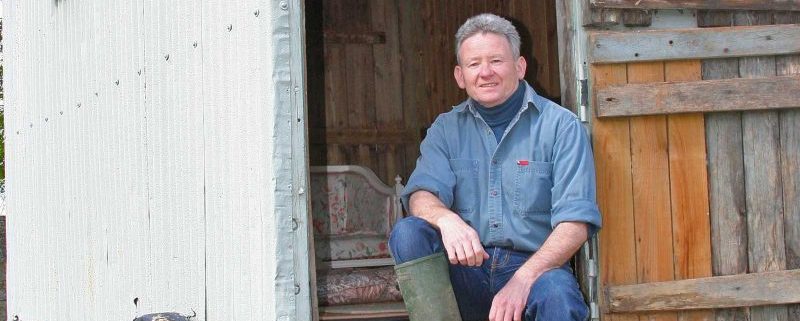
David Morris at the door of a shepherd's hut

Learn How Shaftesbury Was Once The Centre Of Shepherd Hut Building

Shepherd huts are currently all over the home and lifestyle magazines. Celebrities are snapping them up and fitting them out with today’s high-end luxuries. But originally, these shelters would have provided the most basic living conditions for agricultural workers. And the Shaftesbury area was full of them.
A forthcoming talk at Shaftesbury Town Hall will explain how our hilltop town was once at the centre of British shepherd hut production. Dave Morris has devoted much time to researching and restoring these structures. And he’s authored a book on the topic. ThisIsAlfred.com’s Keri Jones asked Dave to describe a shepherd hut.
“The simplest description is a small shed with a wheel on each corner and a curved tin roof. That sums it up in the briefest form, if people have seen one in a garden or at a country show,” Dave explained.

The huts were used as a base for agricultural workers and Dave says that they could be considered the English, lowland version of the Scottish bothy – a refuge for mountain farm labourers. “In the very far north of England and Scotland, you are less likely to come across a traditional shepherd hut. That’s because of the terrain. People would build a more permanent bothy,” said Dave. “But down towards the south of England you see the more mobile shepherds’ living quarters and it’s interesting to see that the style changed with the region and the need.”
Dave grew up in a South Somerset farming community and he remembers seeing shepherd huts from an early age. “I was aware of them. They were fun things. There weren’t so many in Somerset because of the farming landscape and the way that animals were attended to but they were quirky, quaint little hideaway huts on wheels that could be towed from field to field. That appealed to me as a child. It was like a den on wheels,” smiled Dave.
“And then, as I got a bit older, I became fascinated by them. I realised that they were dying out. In the 1960s, 1970s and early 1980s they became almost extinct. They were abandoned in corners of fields as farming changed. Pre-1970 farming almost resembled Victorian-era methods. Then by the 1980s, farming was becoming more intensive and the shepherd huts were abandoned and left to rot. Suddenly there were fewer of them around. That piqued my interest.”
Shepherd huts were not so prevalent in Dave’s home county. “Somerset has slightly different agriculture and a different landscape. It doesn’t have shepherds in such high numbers as Dorset, Wiltshire and Hampshire. Terrain, as well as farming methods, affects whether you would have a hut on your farm. I’m still aware of the few places that had them around our area but nowhere near as many as you would have had around Shaftesbury,” said Dave.
Our area of the Blackmore Vale and Cranborne Chase would have been filled with shepherd huts. “Absolutely. It’s centre of the target,” said Dave. “Anywhere from Sherborne, through the rest of Dorset into Hampshire and Wiltshire is one of the key areas where you would have been likely to see a shepherd hut being used in the 1700s,1800s and early 1900s.”
Our area’s most famous author, Thomas Hardy, featured one of the structures in his writings. “There’s an immediate association in ‘Far From The Madding Crowd’ with the character Gabriel Oak and the shepherd hut. It’s not there by accident. This is stuff that Thomas Hardy would have been very familiar with,” Dave explained.
One of Britain’s most prolific shepherd hut builders was based in our hilltop town. “The Farris Company, who made shepherd huts, was actually based in Shaftesbury. Farris probably was one of the biggest mainstream shepherd hut manufacturers through the 1800s. They were two brothers. They started in Combe Bissett near Salisbury. They set up their own respective companies and John Farris came to Shaftesbury. They made hundreds. They were probably one of the last companies to make them. Farris would be making them, or repairing the huts, until the late 1950s and early 1960s. They were certainly well-known and well-respected agricultural engineers. I don’t know how many people were employed,” said Dave.
What’s the earliest reference to a shepherd hut that Dave has uncovered during his research? “The first written record is in the late 1500s in a manuscript, a book on animal husbandry. There’s the classic line, ‘the shepherd hut is a cabin going up on a wheel’. I found several image references from before then. The earliest is from 1363. Shepherd huts go back much further than the Victorian era – the time that people would initially associate them with.”
Some people are passionate about sheds. There’s even been TV programmes about that obsession. Does Dave believe that the addition of wheels puts the shepherd hut a cut above sheds?
“It certainly helps them stand out from any other shed. They can be moved from field to field, or from farm to farm. That’s just their practical working need. But through that, they start picking up their own history, because they travel. It is interesting when you speak to people who have one. You learn the route it has been on. It’s been to farm sales, it’s moved farms, it’s moved villages. It has seen different landowners. Often on the inside of the original shepherd hut there are scribblings and jottings left by the shepherds who have used it in the past. You might see lamb tallies – the number of lambs born in a particular year, or doodles about the weather. The whole object starts to have its own history which makes them a little more fascinating than any other particular type of shed,” enthused Dave.
Shepherd huts have become very trendy recently. David Cameron famously spent £25,000 on a luxury model for his Cotswold garden. He already has one outside his Cornish holiday home. Dave says he’s happy that shepherd huts are popular again.
“It pleases me that people are enjoying and using their huts in many ways. There seems to be no end to the innovative ideas that people are coming up with. That hasn’t changed in nearly 100 years. It doesn’t matter how you are using your hut, but there should be a nod of respect to how these were used back in the day when they were really tough living spaces. The shepherds would have been on the knife-edge of success or failure in any given year. That’s really difficult living. Provided we don’t lose track of that, it shouldn’t stop us enjoying our huts, however we use them.”
So is the audience for Dave’s talks primarily male? There is that cliché that men are obsessed with sheds and shepherd huts are similar. “You’re talking to a shed man here, definitely,” Dave laughed. “It is right across the board. Men, women, children, everybody loves shepherds’ huts. There’s something about them. It’s something that fascinates, attracts or is quaint, interesting or has a historical or useful link. There are so many interests.”
Dave Morris’s talk, delivered as The Shaftesbury & District Historical Society’s Teulon Porter Memorial Lecture, is called ‘The History Of The Shepherd’s Hut’. It takes place at 7.30pm on Tuesday, 2nd October at Shaftesbury Town Hall. Historical Society members can enter without charge. If you’re not a member, you can pay £5 on the door.

Copyright 2018 Keri Jones